Wood Kitchen Worktops: Are They Right For Your Kitchen?
Wood worktops have a character that is difficult to reproduce with any other material. Warm, tactile and naturally individual, timber can soften a contemporary kitchen, complement traditional cabinetry or provide an interesting contrast alongside stone or quartz.
But wood is also a worktop material that asks a little more from you.
If you are considering wooden kitchen worktops, it is worth understanding both sides of the argument before making your decision. Here's what you need to know.
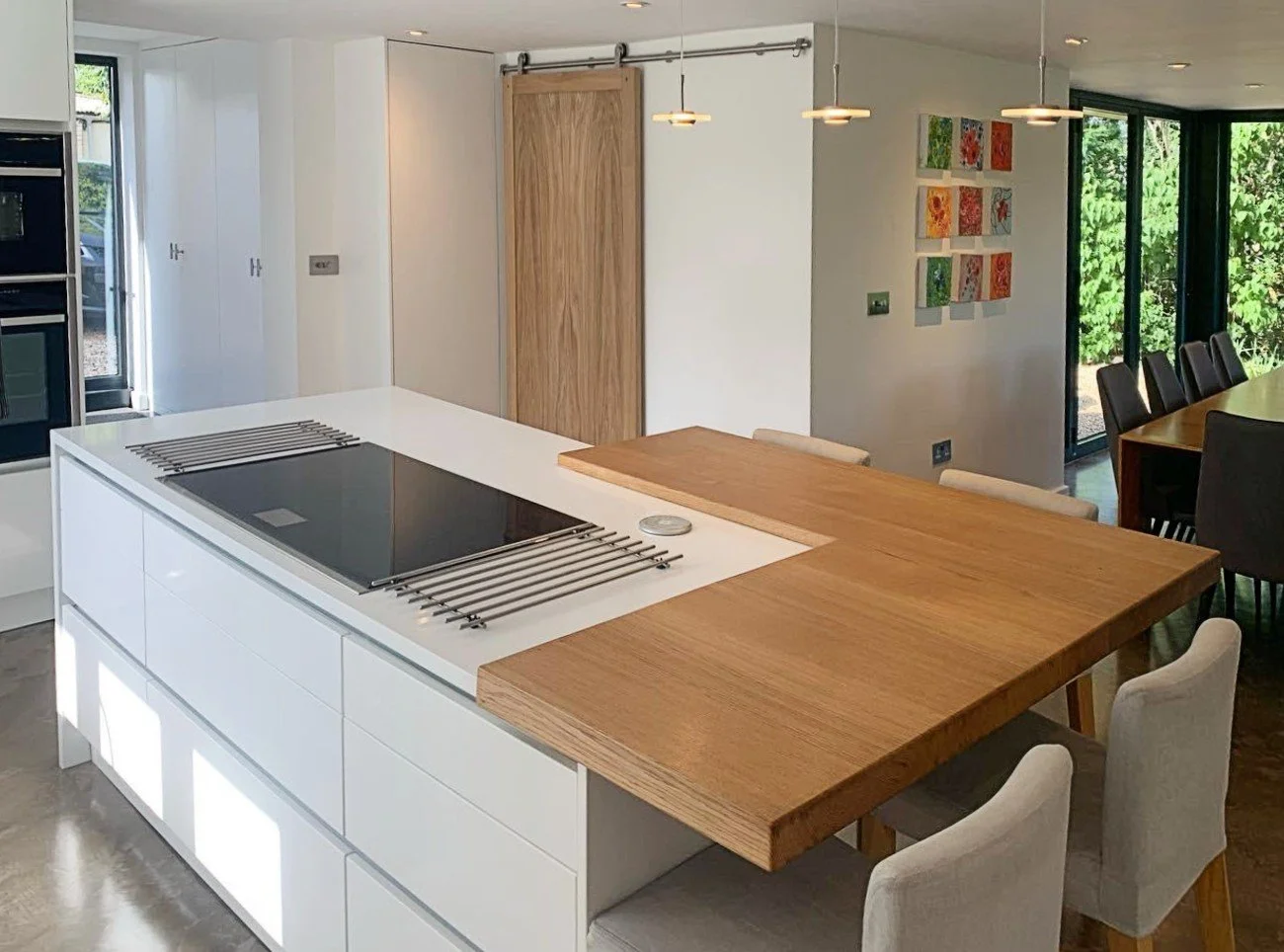
What are the advantages of wood worktops?
One of the biggest attractions of timber is simple, no two pieces look exactly the same.
Natural variations in grain, colour and tone give a wooden worktop character, and its appearance can continue to develop as the timber ages.
Wood is also remarkably versatile. Depending on the species and finish you choose, it can work in everything from a classic painted Shaker kitchen to a clean, contemporary design.
Another significant advantage is repairability.
Unlike some worktop materials, where scratches and chips can be difficult to disguise, many marks in timber can be sanded back before the surface is refinished or re-oiled. With the right care, a quality wooden worktop can provide many years of service.
What are the disadvantages of wood worktops?
Wood does need more maintenance than materials such as quartz or ceramic.
Because timber is naturally porous, the surface needs to be properly treated and maintained to help protect it against water and staining. We recommend oiling wooden worktops approximately every six months, although the exact frequency will depend on the product and how heavily your kitchen is used.
You will also need to be reasonably quick with spills, particularly around sinks and other areas where water regularly collects.
Heat is another consideration. Hot pans should never be placed directly onto a wooden surface as they can leave scorch marks. A trivet or heat-resistant mat is an easy solution, but it does require a little more care in everyday use.
For homeowners looking for a virtually maintenance-free surface, quartz or ceramic may therefore be a better fit.
Can you use wood and stone worktops together?
Absolutely, and in many kitchens, this can be more practical than choosing one material for every surface.
For example, you might choose quartz, granite or ceramic around the sink and main preparation areas, then introduce timber on an island, breakfast bar or seating area.
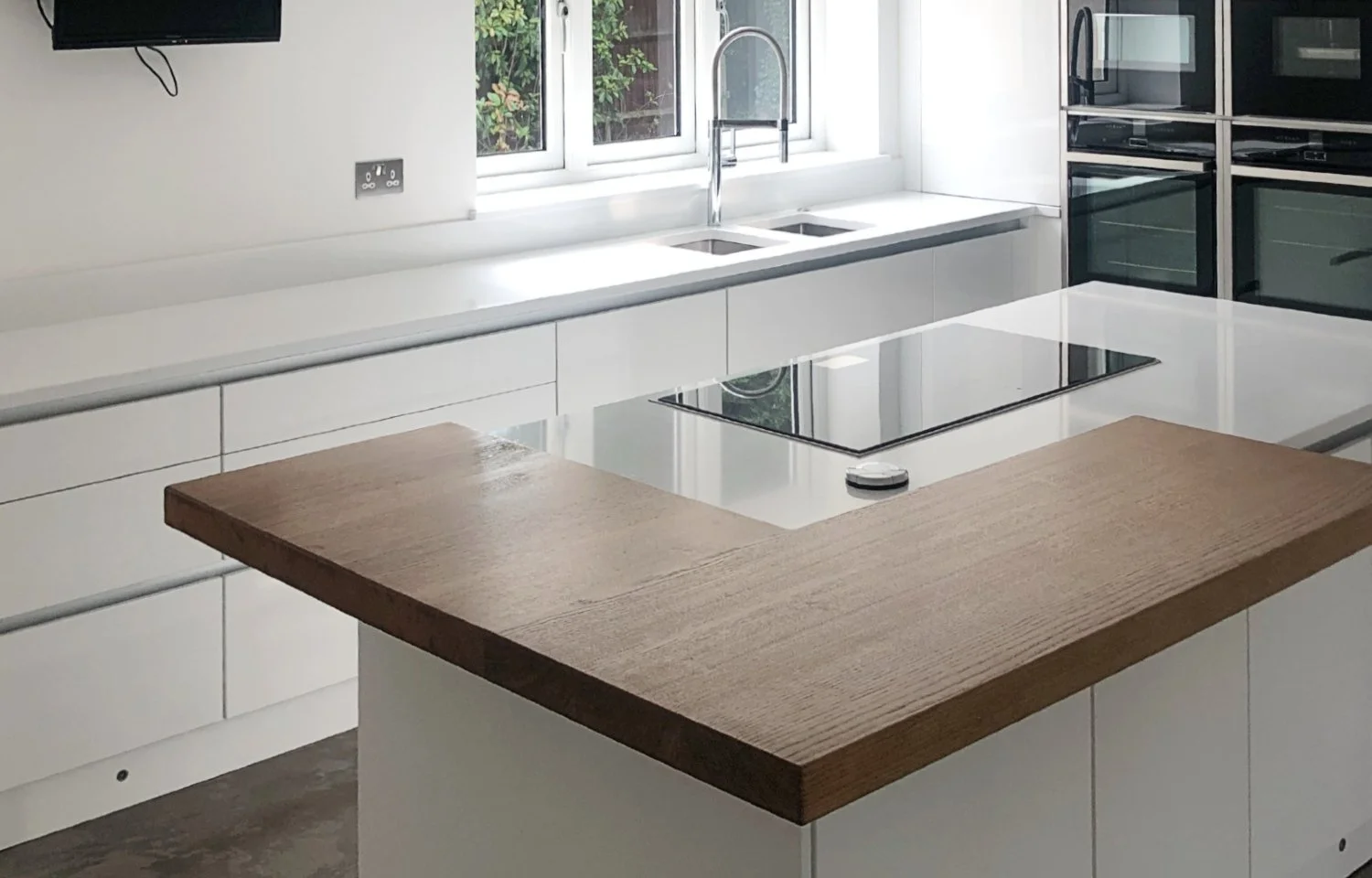
This gives you the warmth and texture of natural wood in the places where it has the greatest visual impact, while using a lower-maintenance surface in the busiest parts of the kitchen.
It can also help visually break up a large kitchen. Rather than having one continuous material throughout the room, contrasting surfaces can make an island or seating area feel more deliberate.
Are wooden worktops difficult to look after?
They do require regular care, but looking after them is relatively straightforward.
For day-to-day cleaning, use a soft cloth with warm water and a suitable mild cleaner. Avoid leaving standing water on the surface and deal with spills promptly.
Your worktop will also need re-oiling periodically to maintain its protective finish.
Minor scratches are not necessarily a disaster either. One of timber's advantages is that many everyday marks can be carefully sanded and refinished, helping to restore the surface rather than replace it.
Are wood worktops worth it?
Wood worktops are a great choice if you value natural materials, warmth and character and you are comfortable carrying out some regular maintenance.
They may not be the best option if your priority is a surface requiring as little care as possible. In that situation, quartz, granite, ceramic or another engineered surface might make more sense.
Find the right worktop for your kitchen
Choosing a worktop is about more than finding a colour you like. Think about how you cook, how much maintenance you are comfortable with and where different materials will be used within the room.
If you are deciding between wood, quartz, granite, ceramic or a combination of surfaces, speak to our team or visit the Northampton showroom. You can compare different options in person and get advice on the materials that best suit your kitchen, lifestyle and budget.