Kitchen Worktop Edge Profiles Explained
Choosing a new worktop usually starts with the material. Quartz, granite, porcelain, or perhaps something more traditional. Then comes the colour, the thickness and the finish.
But there's another detail that's easy to overlook, your worktop edge profile.
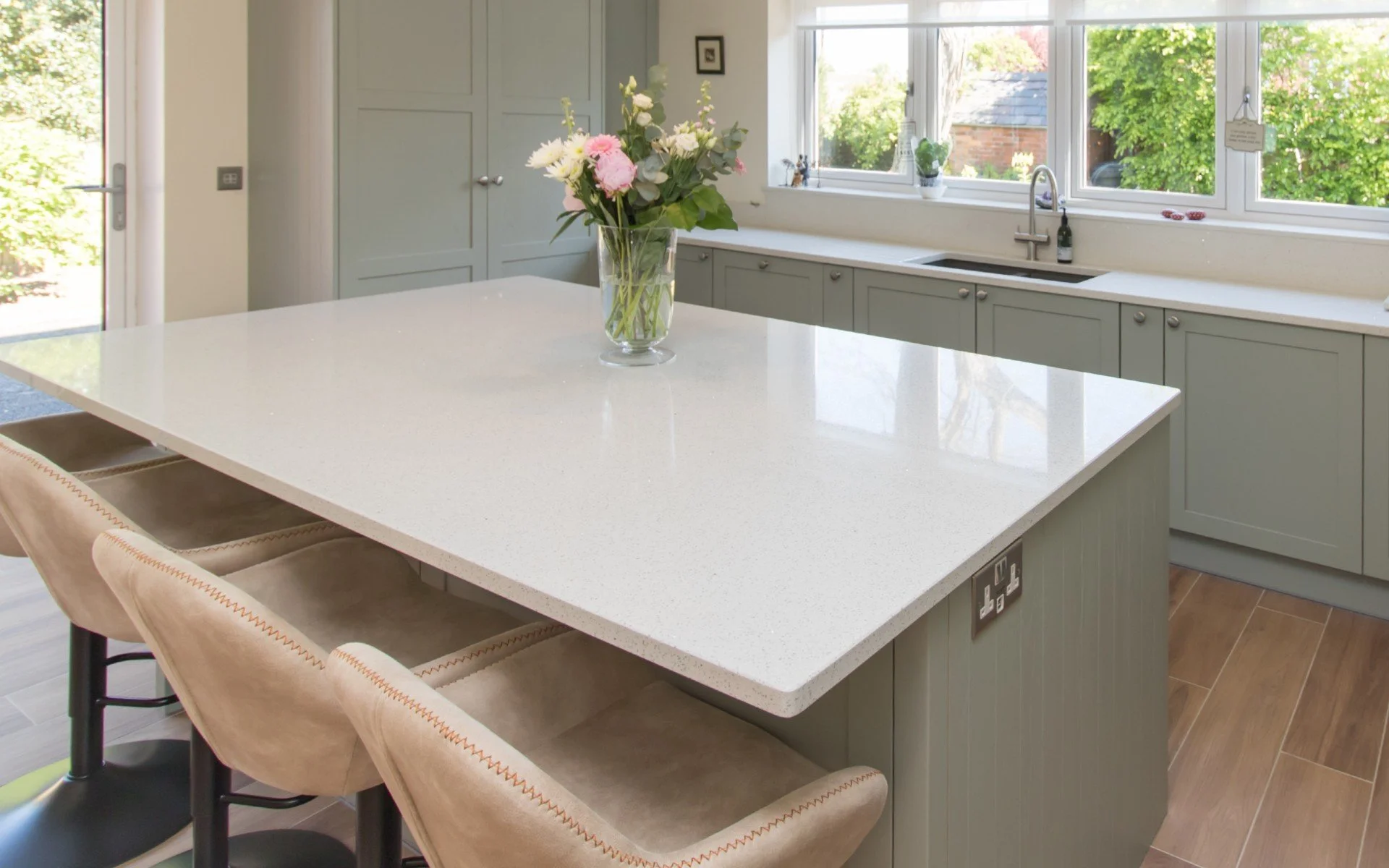
The shape of the edge might seem like a small decision, but it can make a noticeable difference to the overall style of your kitchen. Whether you're aiming for a sleek contemporary space or a more classic design, the right edge profile adds the finishing touch.
At Stone and Quartz, we manufacture every worktop to suit your project, giving you a choice of edge profiles to complement your kitchen perfectly.
Why does the edge profile matter?
An edge profile affects more than just appearance.
It can influence how light reflects across the worktop, soften sharp corners, create a more traditional feel or help achieve the clean, minimalist look that's become so popular in modern kitchens.
Some profiles are purely decorative, while others are designed with practicality and durability in mind.
Here are some of the most popular options.
Bevel Edge
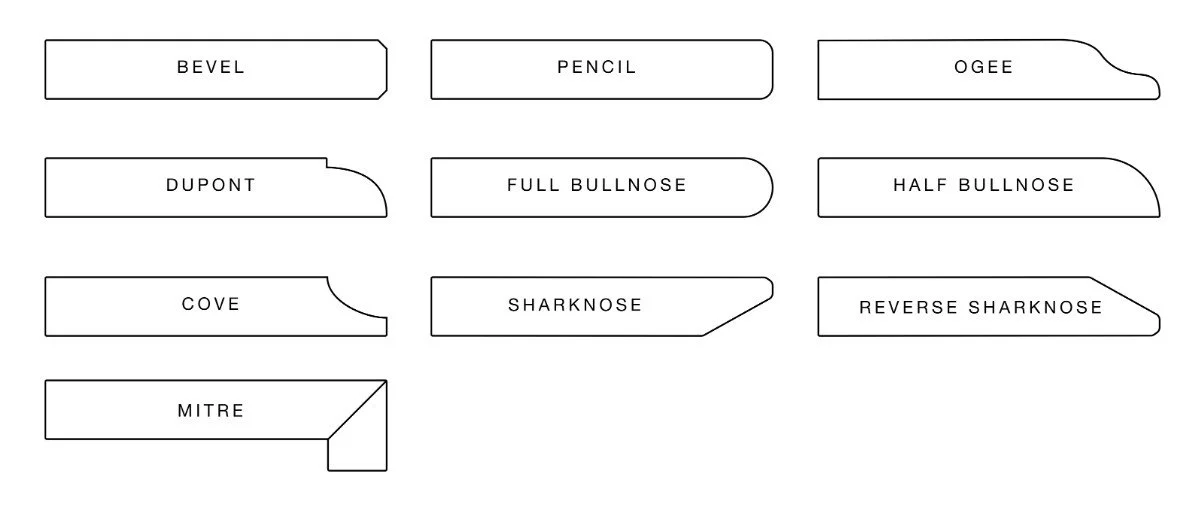
A bevel edge features a small angled cut along the top edge of the worktop.
It's a simple detail that adds definition without becoming overly decorative, making it a popular choice for both modern and traditional kitchens.
Best suited to:
Contemporary kitchens
Shaker kitchens
Granite and quartz worktops
Pencil Edge
One of the most popular choices today, the pencil edge features slightly rounded top corners while maintaining crisp, straight sides.
It feels clean and modern but removes the sharpness of a square edge, making it practical for everyday family life.
Its understated appearance works with almost any kitchen style.
Best suited to:
Modern kitchens
Handleless kitchens
Family homes
Ogee Edge
The ogee edge is one of the most decorative profiles available.
Featuring an elegant S-shaped curve, it creates a luxurious, traditional appearance that's often associated with classic country homes and period properties.
It's particularly striking on natural granite.
Best suited to:
Traditional kitchens
Period homes
Luxury kitchen designs
Dupont Edge
The Dupont profile combines a straight edge with a graceful curved detail beneath.
It offers a refined appearance that's less ornate than an ogee while still adding character and depth.
It's an excellent option if you want something timeless without feeling overly decorative.
Best suited to:
Classic kitchens
Painted Shaker kitchens
Premium interiors
Full Bullnose
A full bullnose edge is completely rounded from top to bottom, creating a smooth, soft finish.
With no sharp corners, it's often chosen for family homes and kitchens where safety is a consideration.
It also gives natural stone a softer, more substantial appearance.
Best suited to:
Family kitchens
Traditional designs
Curved kitchen layouts
Half Bullnose
A half bullnose features a rounded top edge while keeping the underside straight.
This creates a softer appearance than a pencil edge while maintaining a cleaner, more contemporary look than a full bullnose.
It's a versatile option that suits a wide variety of kitchen styles.
Best suited to:
Contemporary kitchens
Transitional designs
Quartz worktops
Cove Edge
The cove profile features a gentle inward curve beneath the top edge.
It adds a subtle decorative detail without becoming too elaborate, making it ideal for homeowners looking for something a little different.
It pairs particularly well with more traditional cabinetry.
Best suited to:
Traditional kitchens
Bespoke cabinetry
Granite worktops
Sharknose Edge
The sharknose profile has become increasingly popular in modern kitchen design.
The underside of the worktop is angled backwards, creating the illusion of a thinner worktop while making it easier to grip handleless cabinet doors.
The result is a sleek, floating appearance that's perfect for minimalist kitchens.
Best suited to:
Handleless kitchens
Modern designs
Contemporary homes
Reverse Sharknose
As the name suggests, the reverse sharknose creates the opposite visual effect, with the profile angled differently to create a distinctive shadow line.
It delivers a striking architectural look that's ideal for bespoke contemporary kitchens.
Best suited to:
Designer kitchens
Minimalist interiors
Modern bespoke projects
Mitred Edge
A mitred edge isn't really a profile in the traditional sense, but a construction technique used to create the appearance of a much thicker worktop.
By joining two pieces of stone at 45 degrees, the edge appears to be 50mm, 80mm or even thicker, while using the standard slab thickness internally.
This creates a bold, luxurious appearance that's become increasingly popular in high-end kitchen design.
Best suited to:
Kitchen islands
Waterfall ends
Luxury contemporary kitchens
Which worktop edge profile is right for you?
There's no single "best" edge profile. The right choice depends on your kitchen style, the material you've chosen, and the look you're trying to achieve.
If you're creating a sleek, modern kitchen, a pencil edge or sharknose profile may be the perfect fit. If you're designing a timeless Shaker kitchen, a bevel or Dupont edge could complement the cabinetry beautifully. For more traditional homes, ogee and cove profiles add elegance and craftsmanship.
Expertly Crafted Stone Worktops
At Stone and Quartz, every worktop is manufactured to order using precision machinery and finished by skilled craftsmen. We'll guide you through every detail, from choosing the right material and thickness to selecting the perfect edge profile for your project.
Whether you're supplying a single kitchen or multiple developments, we're here to help create a worktop that's every bit as impressive in the details as it is in the overall design.
Thinking about your next project? Contact Stone and Quartz to discuss your worktop options and our full range of available edge profiles.