Quartz vs Quartzite Worktops: What’s the Difference?
One of the biggest questions we’re asked about kitchen worktops is, “What’s the difference between quartz and quartzite?”
With such similar names, you’d be forgiven for thinking they’re practically the same material. However, while both are beautiful, durable and popular choices for kitchen worktops, they’re actually very different.
And understanding those differences is important, particularly when you’re investing in a new kitchen that you want to look and perform beautifully for years to come.
So, before you make your decision based on appearance alone, let’s explore what sets quartz and quartzite apart.
What are quartz worktops?
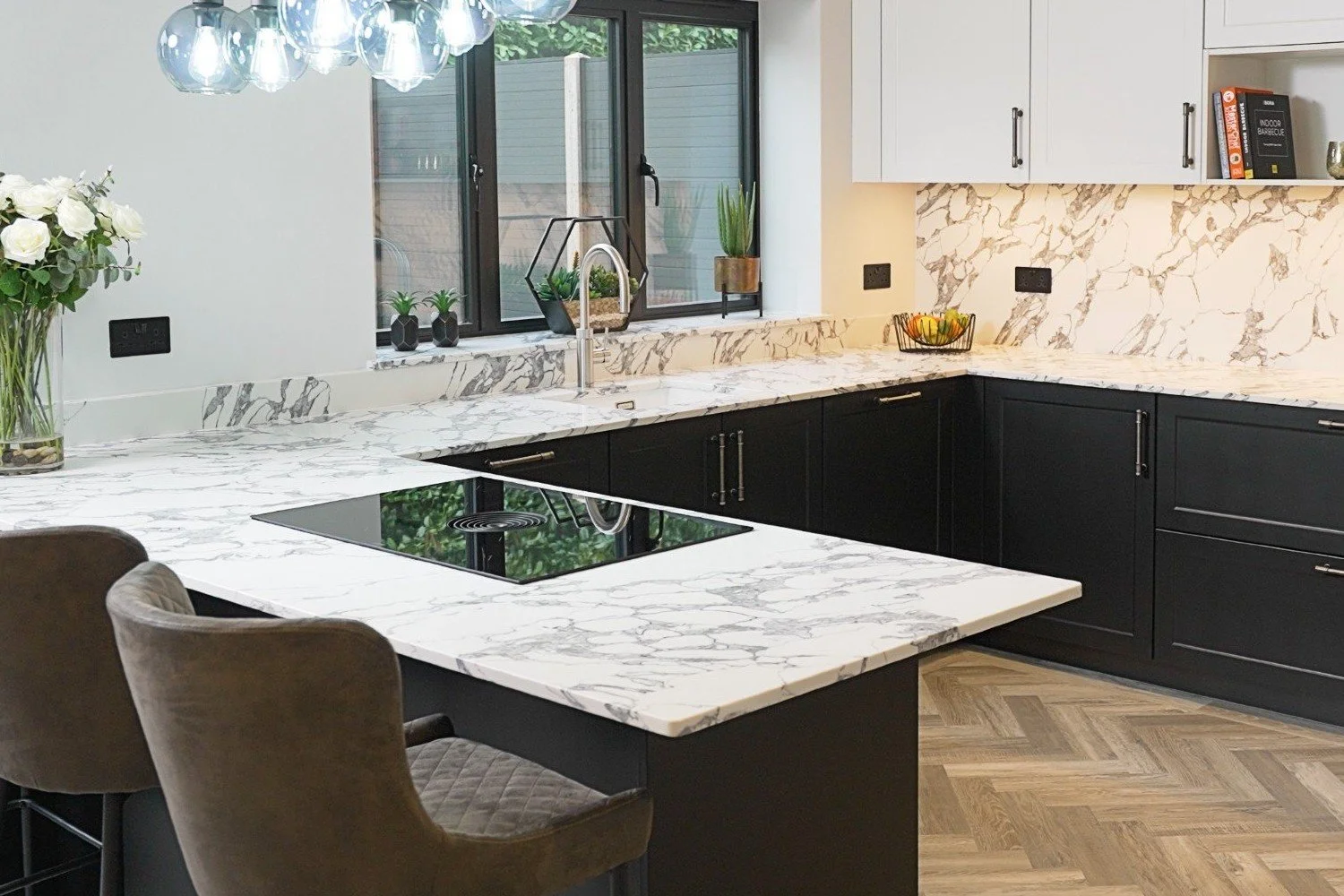
Quartz is an engineered stone, manufactured from natural quartz combined with resins, pigments, and other materials.
Unlike natural stone, quartz is manufactured to achieve a particular colour, pattern and finish, making it a popular choice for homeowners who want a consistent appearance across their kitchen worktops.
The benefits of quartz worktops
One of the biggest advantages of quartz is its ease of maintenance.
Because quartz is non-porous, it doesn’t require sealing and is highly resistant to everyday staining. A simple wipe with warm water and a mild cleaning product is usually all that’s needed to keep it looking its best.
Quartz is also available in an extensive range of colours and finishes, including designs that closely replicate the appearance of natural marble.
Its consistent patterns make it particularly appealing for contemporary kitchens, especially where a uniform finish is important.
Are there any drawbacks?
Although quartz is durable, it isn’t completely heat-resistant.
The resins used during manufacturing can be damaged by excessive heat, so placing hot pans directly onto the surface isn’t recommended. Using trivets or heatproof mats will help protect your worktops.
Quartz is also more uniform in appearance than natural stone, which may be a disadvantage if you love the unpredictable patterns and individual character of natural materials.
What are quartzite worktops?
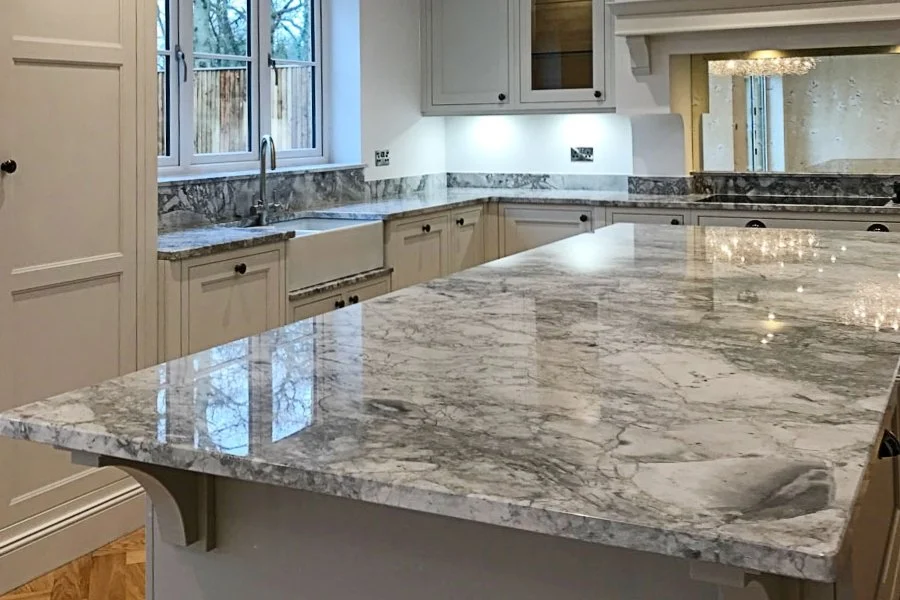
Quartzite, on the other hand, is a completely natural stone.
Formed when sandstone undergoes intense heat and pressure deep within the earth, quartzite is known for its strength, distinctive veining and natural beauty.
No two slabs are exactly alike, making it an appealing choice for homeowners who want something truly individual.
The benefits of quartzite worktops
Quartzite is an exceptionally hard and durable material, offering excellent resistance to scratches and everyday wear.
It also has greater natural heat resistance than engineered quartz, although we’d still recommend using trivets to protect the surface and any sealant.
Perhaps its biggest attraction is its appearance.
Quartzite can feature dramatic veining, subtle colour variations and beautiful natural patterns that are difficult to replicate. For homeowners who want their worktop to become a standout feature, quartzite is certainly worth considering.
Are there any drawbacks?
Unlike engineered quartz, quartzite is generally porous and requires sealing to help protect it against staining.
The frequency of sealing depends on the particular stone, its finish and the sealant used.
Quartzite can also be more expensive than quartz, particularly when choosing rare colours or distinctive slabs.
And because it’s a natural material, variations in colour and pattern are part of its character, something to embrace rather than expect to control.
Quartz vs quartzite: How do they compare?
| FEATURE | QUARTZ | QUARTZITE |
|---|---|---|
| Material | Engineered stone | Natural stone |
| Appearance | Consistent colours and patterns | Unique natural veining |
| Maintenance | Low maintenance | Requires more care |
| Sealing | Not required | Generally required |
| Heat resistance | Sensitive to high heat | Naturally heat-resistant |
| Scratch resistance | Good | Excellent |
| Stain resistance | Very good | Good when properly sealed |
| Price | Wide range of price points | Often more expensive |
Which is better for your kitchen?
The answer depends on how you use your kitchen and what matters most to you.
Quartz could be the better choice if:
You want a worktop that’s easy to clean and maintain.
You prefer consistent colours and patterns.
You don’t want to worry about periodic sealing.
You want plenty of choice when it comes to colours and finishes.
Quartzite could be the better choice if:
You love the character and individuality of natural stone.
You want a worktop with excellent scratch and heat resistance.
You’re happy to give your worktops a little extra care.
You want striking natural veining that makes a statement.
Don’t choose your kitchen worktops on looks alone
It’s easy to fall in love with a beautiful worktop when you see it in a showroom. But appearance is only part of the decision.
Think about how you use your kitchen every day.
Do you cook regularly? Do you have a busy family kitchen where spills are inevitable? Would you prefer something that needs very little maintenance, or are you happy to spend a little more time caring for natural stone?
Both quartz and quartzite can be excellent investments, but choosing the right material for your lifestyle is just as important as choosing the right colour.
Need help deciding?
Our team can talk you through the different materials, finishes, and practical considerations to help you find a kitchen worktop that looks beautiful and suits the way you live.
Get in touch to explore your options.